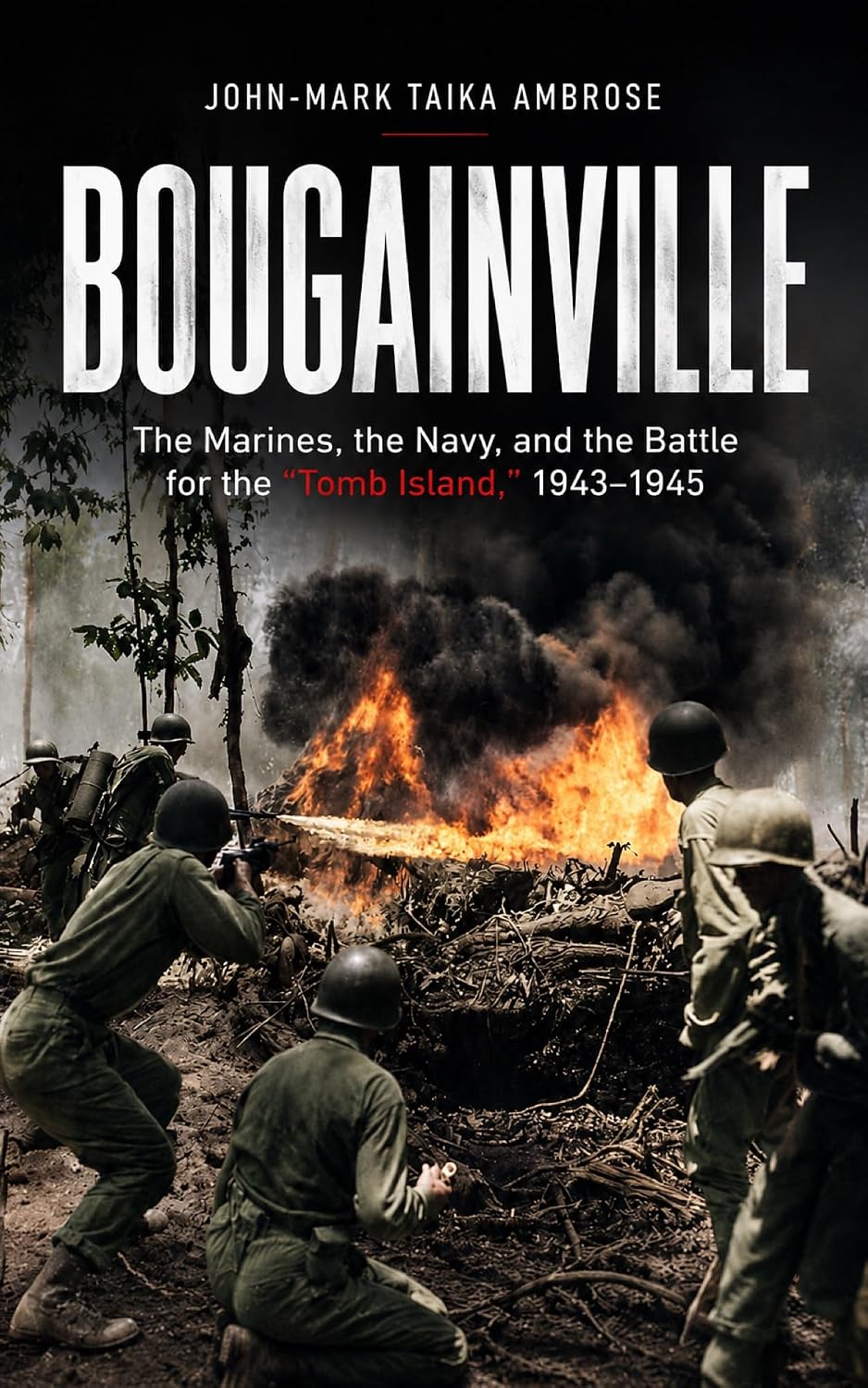
Bougainville
The Marines, the Navy, and the Battle for the “Tomb Island,” 1943–1945
Eighteen months of jungle combat, night surface battles, and a starvation siege that pinned down a Japanese army of more than 40,000 men and helped seal the fate of Rabaul, without a single Allied soldier ever setting foot inside it.
Bougainville
On November 1, 1943, three Marine regiments hit the beach at Cape Torokina, on an island the Japanese garrison had already started calling Tomb Island. Bougainville tells the full story of the campaign that followed: Halsey's decision to bypass Rabaul rather than storm it, the landing at Empress Augusta Bay and the night battle that followed, Arleigh Burke's destroyers running down a Japanese task force off Cape St. George, and Operation TA, the last major Japanese counterattack of the Pacific War's middle years.
Drawing on official unit histories, oral testimony from American, Australian, and Japanese veterans, and Japanese-language sources rarely used in English accounts of the war, it reconstructs a campaign most World War II histories cover in a paragraph.
Buy on Amazon- The landing at Cape Torokina and the battle for Empress Augusta Bay
- Arleigh Burke's destroyers at the Battle of Cape St. George
- Operation TA, the last major Japanese counteroffensive of 1944
- Sergeant Robert Owens, who charged a Japanese gun position alone
- Corporal Henry Gurke and Sergeant Herbert Thomas, who each smothered a grenade to save their men
- Navajo Code Talker John Kinsel Sr., eighteen years old at his first battle
- The Japanese 6th Division, drafted from Kumamoto and Okinawa, and its two-year siege
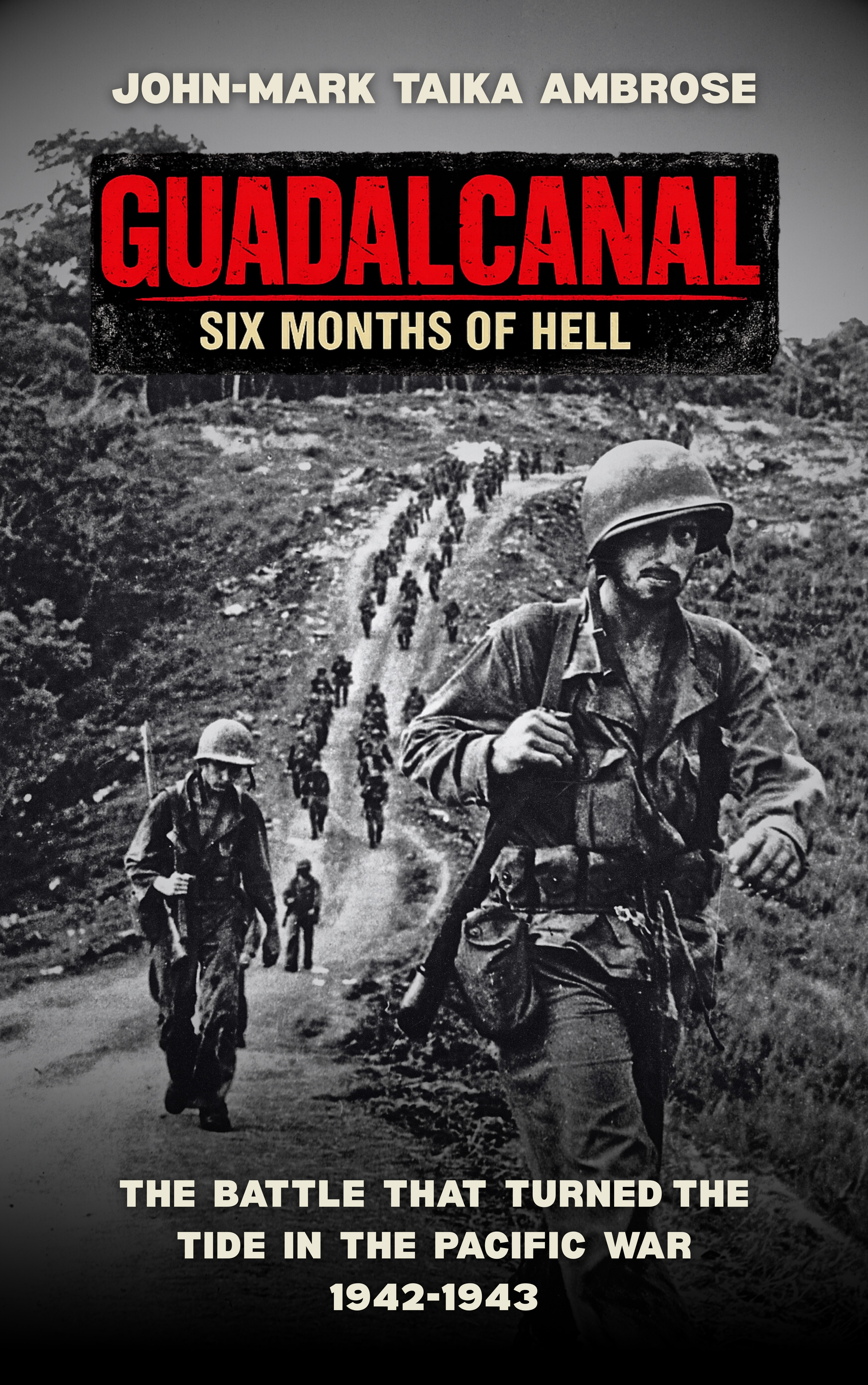
Guadalcanal: Six Months of Hell
Guadalcanal: Six Months of Hell follows the campaign chronologically, from the strategic decisions that put American Marines on Guadalcanal in August 1942 to the Japanese evacuation in February 1943. It covers the land battles, the naval engagements, the air combat, the logistics, and the command decisions that shaped six months of fighting in conditions that tested every man who endured them.
Written by a historian born on the very ground where the battle was fought, this account draws on archival research, oral histories from Solomon Islander families, and decades of on-site fieldwork across every major battlefield of the campaign.
Buy on Amazon- Comprehensive coverage of land, sea, and air operations
- First-person accounts from American and Japanese combatants
- Solomon Islander oral histories never before published
- On-the-ground battlefield analysis from decades of fieldwork
- Both sides of the conflict examined with equal rigor
- The human cost of Guadalcanal—malaria, starvation, and endurance
- The lasting impact of the campaign on the Solomon Islands
Walking the Battlefields
I have walked every battlefield described in this book. I have stood on the sandbar at Alligator Creek where Ichiki's men charged into the Marine guns. I have climbed the ridge where Edson and his Raiders held through two nights of attacks that came close to breaking Henderson Field's last line of defense. I have followed the route of Carlson's long patrol through jungle that has not changed in any meaningful way since 1942—the same heat, the same insects, the same canopy so thick it blocks the sky.
The terrain tells you things that the documents cannot. It tells you why the Marines on Edson's Ridge could not see what was coming until it was on top of them. It tells you why the 132nd Infantry spent weeks failing to reduce the Gifu strongpoint—because when you stand in that country and look at the interlocking fields of fire that the Japanese engineers created in the folds of the ridgeline, you understand the position in a way that no map can convey.
The jungle is beautiful from the air. From the ground, at night, in the rain, it is something else entirely.
Stay Updated
Sign up for dispatches on upcoming books, historical research, and notes from the battlefields of the Pacific.
Subscribe to Newsletter